The History of the Castle
The return of Lascombes
The name of this castle comes from its oldest known owner, theknight Antoine de Lascombes, born in 1695. His successive heirs retained ownership until the Revolution, after which other families succeeded one another at its head. One thinks in particular of theHue family, owner in 1855 when theChâteau Lascombeswas awarded the honorary title of2nd Grand Cru ClasséOr even the familyChaix d'Est-Ange, which was the origin of the construction of the Castle in1867At the end of the 19th century, while the estate had gained in renown, the size of the vineyard and the quality of the wine began to decline.
Fortunately, in 1952, Lascombes was bought by a group of investors, led byAlexis LichineHe spearheaded the modernization of the facilities, and the Château and its wine regained their vigor.
After this prosperous period, the wine stagnated. This can be partly explained by the desire to expand the estate, which led to the acquisition of lower-quality plots.
Finally, there was the arrival ofDominique Befveto the management of the Castle in 2001 which will allow it to regain all its former grandeur.
The terroir
A vast estate in the Margaux AOC
THEChâteau Lascombesis one of the fewClassified Grands Crusto extend over such a vast area. Indeed, the vineyard covers an area of over 112 hectares. The terroir thus cultivated consists mainly of layers ofserious, ofgravelly clays, ofclay-limestoneandlimestoneAs for the grape varieties, half of them are composed ofBlack Merlot(king of grape varieties), ofCabernet Sauvignonalmost in the same quantities, and finally 5% ofPetit VerdotThe vines are on average 35 years old. Furthermore, Château Lascombes respects its exceptional environment by practicing asustainable viticulture.
The Lascombes style
Complex and elegant wines
THEChâteau Lascombes wineThis Second Growth classified wine is meticulously crafted. Everything is done to ensure it reaches the excellence of the very greatest.MargauxFirst, meticulous care is given to the grapes—even before the harvest—with careful optimization of the vine/soil/graft combination. The harvest is then carried out entirely by hand. The experts' work continues, notably with cold maceration. This relatively uncommon process results in a more intense color, as well as greater stability and more complex aromas. Finally, the last stage of the process, which gives the wine its full depth, is aging. In thewine cellar of Château Lascombes, inside barrels ofFrench oaksThe wine will quietly develop its full potential over 18 to 24 months. Through this demanding process and patience, the vineyard allows for the production of 3 different wines.
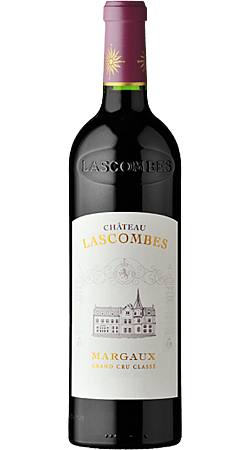
- The first wineChâteau LascombesThis is a deep, powerful, and smooth wine. Its remarkable tannic richness does not detract from its elegance. It is a wine with excellent aging potential.
- His younger brother,Chevalier de LascombesThis grape, also found in the Margaux appellation, is fruitier and more supple. It's a charming wine that should be enjoyed within 10 years.
- And finally, the estate produces a third wine, in theHaut-MédocWith a soft and supple attack, this fruity wine with a round mouthfeel is best enjoyed in its youth.