Le Crock Castle through the centuries
A rich history from the 18th century to the present day
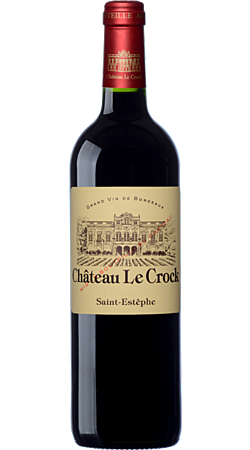
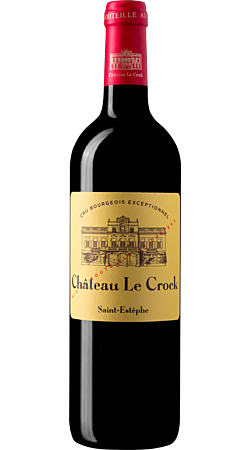
THEChâteau Le CrockIt was first known as Cru de Bastérot-Ségur in the 18th and 19th centuries. In fact, it appeared in numerous rankings recognizing the finest wines during that period. The estate, as we know it today, was thus born from the initiative of the Merman family in the 19th century. It was they who built the château, characterized by its unique architecture. It is also listed as a regional heritage site for its remarkable building.
The merchant familyCuvelierwould then become the owner of Château Le Crock in 1903. By 1932, the estate's wines had acquired the status ofCru Bourgeois Supérieurwhich places them among the biggest names in the appellationSaint-Estèphe.From 1979, Didier Cuvelier became manager of the various châteaux owned by his family (Château Le Crock, Château Léoville Poyferré, and Moulin Riche). His cousin,Sara Lecompte Cuvelier, will then take over in 2018, with the ambition of leading Château Le Crock to an unprecedented level of excellence.
The typically Bordeaux terroir of Château Le Crock
The ideal conditions for the development of great wines
The vineyard ofChâteau Le Crockextends over32 hectaresat the heart of the appellationSaint-EstèpheIt thus benefits from a very high-quality terroir, composed of gravel, sand on the surface, and a clay subsoil. This composition offers several significant advantages, such as optimal soil drainage, the ability to retain heat, and the capacity to build up water reserves. Furthermore, the proximity of the Gironde estuary allows for ideal temperature regulation, thus avoiding extreme temperature fluctuations. The decision was also made to work the vineyard in the most natural way possible, minimizing the use of chemical inputs. The environment, thus respected and preserved, yields a rewarding result in the wines, thanks to the superior quality of the soil. The owners of Château Le Crock have therefore chosen to select grape varieties characteristic of the Bordeaux region for this vineyard, typical of Saint-Estèphe. Indeed, 53% of the vineyard is planted with Cabernet Sauvignon, 33% with Merlot, 9% with Cabernet Franc, and 5% with Petit Verdot. With ideal conditions for the development of these grape varieties, both in terms of climate and soil quality, the harvests are healthy and produce very fine wines every vintage.
The expertise of the Château Le Crock team
The birth of great wines
The current owner ofChâteau Le Crock,Sara Lecompte CuvelierShe has surrounded herself with experts to achieve her ambition of excellence. Among them is the head of culture.Jonathan Servantthe consulting oenologistIsabelle Davinand the cellar masterYoann LavigneTogether, they implemented various processes designed to create the highest quality wines possible. From the very start of the harvest, meticulous attention to detail is paramount. The grapes are picked plot by plot, entirely by hand, allowing for an initial sorting directly in the vineyard. A second sorting then takes place on a sorting table, where only the finest berries are selected. Next, the aging and winemaking stages employ modern techniques to tailor each practice to the specific needs of each plot. Finally, the blending process takes place after several tasting sessions to create the best possible wines.
Then the first wine was born“Château Le Crock”and the second wine“La Croix Saint-Estèphe”The château's first wine is a Cru Bourgeois to be enjoyed after along aging of 20 to 25 years.You will then discover a supple wine, full of roundness and harmony. The second wine, on the other hand, is best enjoyed younger, after 10 to 15 years of aging.