The history of Maison Telmont
An institution since 1912
It all began in 1911, during the Champagne revolts.Henri Lhôpitalthen composed the anthem "Glory to Champagne!which encouraged maintaining the highest quality of the vintages. A year later, he founded his ownChampagne HouseIn 1937,André Lhôpitaltakes over the reins of the estate from his father.
After being renamedJ. de TelmontFounded in 1947 as a tribute to one of the finest plots of land, the house was established in 1968 in Damery at the foot of the vineyards, where it still stands today. The house was later sold to Serge Lhôpital, and then, in 1998, to his children, Bertrand and Pascale.
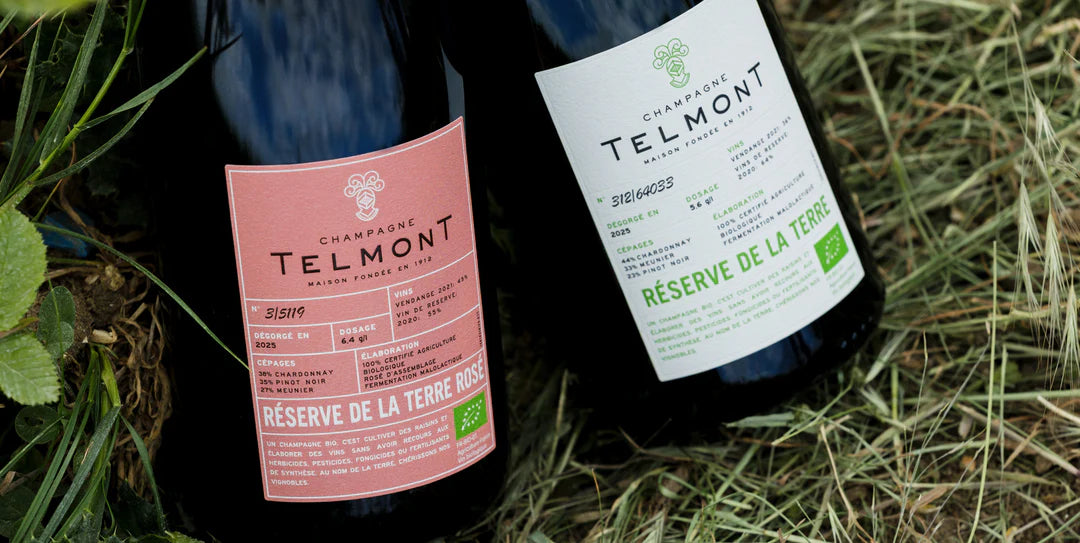
The desire to respect nature and the environment has always been one of the core values for theTelmont HouseIn 2017, the certificationOrganic Farmingis finally obtained for part of the plots.
Following a meeting withRémy CointreauAndBertrand LhôpitalIn 2020, the two houses decided to join forces, making the family group the majority shareholder of the House.
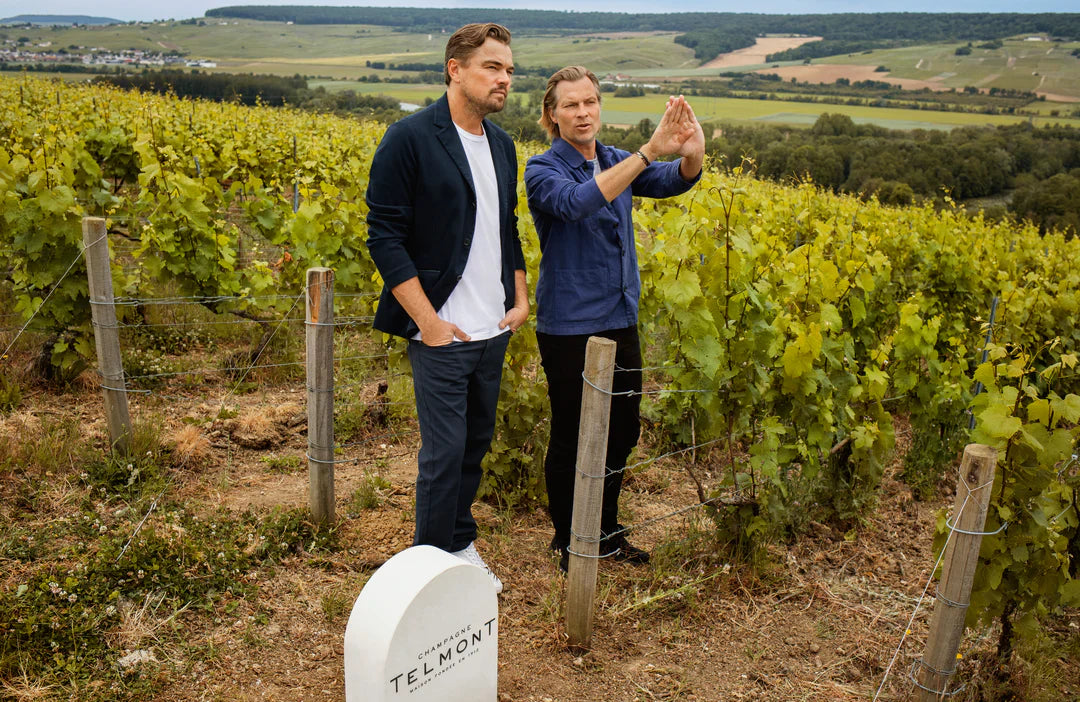
Seduced by the values and strong environmental philosophy of the estate and its avant-garde vision, the famous actorLeonardo DiCapriojoined theTelmont Houseas a minority shareholder.
The terroir of Maison Telmont
In the Name of the Earth
Within theTelmont HousePreserving the land and biodiversity is a core value. Since 2017, 72% of the 24.5 hectares have been converted to organic farming.organic farmingThe entire area will be converted and certified by 2025. Maison Telmont also buys grapes from partner winegrowers on a total of 56.5 hectares.
In total, we find a grape variety ofchardonnay, ofmillerandPinot Noir.The vines benefit from a semi-oceanic and semi-continental climate. The soils are composed of chalk, limestone and clay.
The expertise within Maison Telmont
A know-how that protects the land
Highly meticulous, precise, and above all, respectful of the values of the House,Bertrand Lhôpitaland his team guarantee a quality champagne. Every year, nearly 120,000 grape harvesters come to pick the grapes from August to October. Only whole and undamaged bunches are harvested.
Next, a slow and steady pressing is carried out. It is essential that this pressing be done on the same day the grapes are harvested. The first fermentation lasts 6 to 10 days in stainless steel tanks, naturally transforming the juice into wine. Following this, the blending stage begins, a crucial step in the production of Champagne. Once the different grape varieties are blended, the wine is then bottled. After bottling, the cuvées are sealed with a metal cork. This is when the second fermentation begins, and the wine develops its effervescence. For a period of at least three years, the Champagnes then age in the cellars. Over a period of four to seven weeks, the bottles are also riddled. Finally, the neck of the bottle is immersed in a bath at approximately -25°C, which creates a frozen cork that traps the sediment. The internal pressure will thus allow the frozen sediments to be ejected when the bottle is opened.