Nearly 900 years of history
Carbonnieux Castle through the centuries
The History ofChâteau CarbonnieuxIts history is full of twists and turns throughout the centuries. Indeed, the first traces of its existence date back to the beginning of the 13th century, with archives mentioning a certainRamon Carbonnieuxas owner of the property in 1234. The estate prospered from then on and benefited from easy trade with England, whose fiefdom was then the Bordeaux region. The Hundred Years' War, however, brought this golden age to an end and forced the Benedictines to sell the castle to Jean de Ferron. Recently ennobled, he needed to own a large vineyard in the Graves region, for which he undertook a vast policy of acquisition and land consolidation.Ferron familyThis will continue for two and a half centuries, transforming theChâteau Carbonnieuxin a large domain, such as we still know it today.
However, heavily indebted, this noble family was forced to sell the estate, which then passed to the monks of Sainte-Croix Abbey in 1740. Under their stewardship, the vineyard established itself as one of the foremost white wines of Graves, becoming iconic. They began bottling their wine on the estate, experimented with new grape blends, and innovated in winemaking techniques. Furthermore, they transformed the winery into one of the most modern in the region. All these changes contributed to the wine's development.Château Carbonnieuxto be considered the best white wine of Guyenne. At the same time, the estate saw its international reputation skyrocket, becoming sought after from the United States to Constantinople.
After the French Revolution, the castle was sold as national property to theBouchereau familywhich will continue the estate's move upmarket, notably by undertaking a collection of grape varieties unique in the world. Between 1878 and 1956, the estate passed through various owners, eventually ending with thePerrin familystill at its head today. As early as 1956,Marc Perrinwill indeed begin a vast restoration of theChâteau Carbonnieuxand its vineyard, expanding it from 45 to 95 hectares today. In the 1990s, his son Antony built a new vat room and modernized the cellars to adapt them to new winemaking techniques. Finally, his children, Eric, Christine, and Philibert, gradually took over the reins to now head the château and lead it once again to its peak.
A Château with a unique terroir
The excellence of the Pessac-Léognan appellation
The situation of the vineyard ofChâteau Carbonnieuxis a significant advantage for this centuries-old estate. Indeed, its location on soil with a rich geological history, on the gravelly slopes of the Garonne, gives it an exceptional and unique terroir. In fact, the morphology and diversity of the soils are such that it is hardly surprising to find such excellent wines produced within theChâteau CarbonnieuxThe vineyard boasts a diverse range of plots, each with its own rich and complex character, including clay-gravel soils, gravelly soils (of varying depths and sizes), clay-limestone soils, clay veins, limestone veins, sandy-gravelly soils, and more. Furthermore, the numerous drainage channels promote water respiration throughout the entire slope and its surrounding areas, ensuring natural soil drainage. This effectively manages the water stress that the vines require during berry ripening. Finally, this exceptional terroir benefits theChâteau Carbonnieuxwould be nothing without highly specialized expertise to enhance it. Thus, each plot of the vineyard is treated individually, receiving personalized care based on its pedological, agrological and ampelographic characteristics.
The Classified Growths of Château Carbonnieux
A typical Bordeaux grape variety
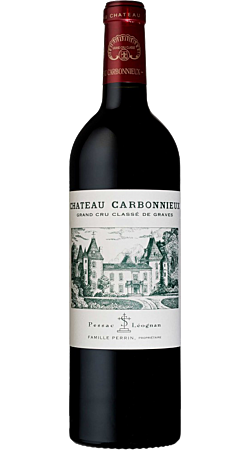
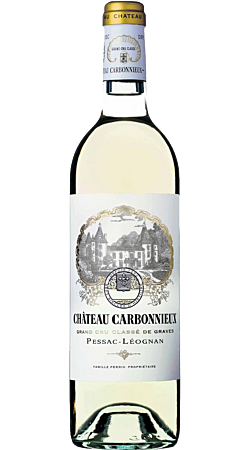
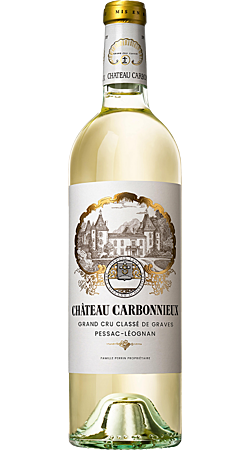
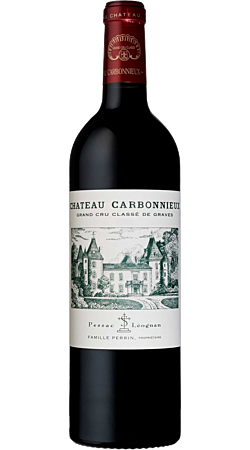
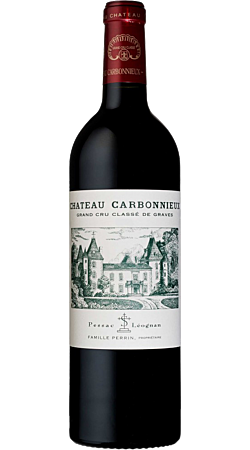
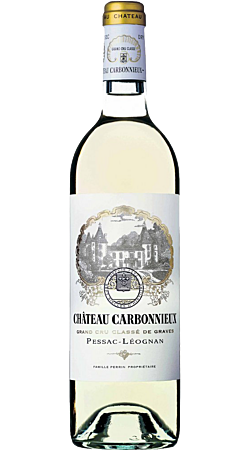
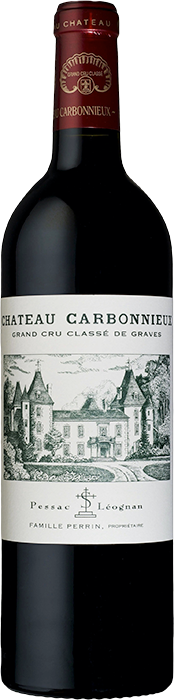
THEChâteau Carbonnieuxcan boast of being one of the 6 castles bearing the title ofCru Classé de Gravesin red and white. Indeed, the estate was awarded this very prestigious official title in 1953 and then again in 1959 during the official classification of the Grands Crus of Graves. This undoubtedly stems from the fact that among its92 hectares planted in a single blockThe distribution is almost equal between red and white grape varieties. Indeed, 50 hectares are planted with red grape varieties and 42 hectares with white grape varieties. Among the reds, Cabernet Sauvignon accounts for 60% on deep, massive gravel soils, Merlot 30% on fine, clay-gravel soils, Cabernet Franc 7%, and Petit Verdot 3%, both on clay-limestone soils covered with fine gravel. As for the whites, Sauvignon Blanc dominates at 65%, on both deep gravel soils and fine clay-limestone gravel soils. Sémillon, for its part, represents 35% of the white grape varieties and is limited to clay-limestone soils. All of these grape variety choices are also accompanied by a growing trend towards...organic viticulturewithin the vineyard. TheChâteau Carbonnieuxindeed benefits from the classification of sustainable agriculture and isHVE3 certified(High Environmental Value level 3). Its actions will, for example, involve abandoning the use of chemical insecticides, herbicides, and acaricides in favor of ecological methods that respect biodiversity and stimulate the vines' natural defenses. Furthermore, most vineyard work is done manually, plots are left fallow to maintain a certain fauna within the estate, particularly bees, and everything is recycled on the property, from office waste to vineyard waste.